
Let me tell you something right off the bat—I just spent 15 hours fumbling through Octopath Traveler 0 making every rookie mistake in the book, and honestly? I wish someone had grabbed me by the shoulders and screamed these tips in my face before I started. This isn’t your typical Octopath experience. Square Enix took the bones of their mobile gacha game, Champions of the Continent, surgically reconstructed it into a single-player console masterpiece, and wrapped it in enough grinding mechanics to make even Dark Souls look merciful.
Released on December 4, 2025, across basically every platform you own (Switch, Switch 2, PlayStation, Xbox, PC), this prequel to the original Octopath Traveler drops you into Orsterra with a custom protagonist, 30+ recruitable characters, and a town-building system that’s somehow both addictive and terrifying. The game asks you to rebuild Wishvale from literal ashes while juggling three separate storylines, managing an 8-person party, and not losing your soul to the grind.
 My Winter Car How to Call: Complete Phone Guide 2026
 Here’s the brutal truth: Octopath Traveler 0 will absolutely destroy you if you don’t understand its systems. I’ve compiled this beginner’s guide after making every possible mistake so you don’t have to. These aren’t generic tips you’ll find everywhere—these are the hard-earned lessons from someone who learned them the painful way.
 Where Winds Meet Qinghe Cat: Complete Location Guide
 Table of Contents
The Illusion of Choice: Wealth, Power, or Fame (And Why It Doesn’t Actually Matter)
Picture this: You’re staring at the character creation screen, sweating over whether to choose Wealth, Power, or Fame. It feels monumental, like choosing your Hogwarts house or deciding whether to text your ex at 2 AM. Here’s the reality check you need: it doesn’t matter.
I started with the Wealth path because, well, I like money. Seemed logical. But here’s what the game doesn’t tell you upfront—you’re not locked into anything. You can freely switch between all three storylines whenever you want, and you’ll eventually need to complete all of them anyway. Hit a difficulty wall grinding through the Power chapter? Just warp over to the Fame storyline and come back later.
The smart approach? Tackle Chapter 1 of all three paths before advancing to Chapter 2 of any single one. This strategy gives you more party members, higher character levels, better equipment, and—most importantly—prevents you from getting absolutely demolished by end-chapter bosses when you’re underleveled. Trust me on this one.
 Pokémon GO New Year’s 2026 Event: Your Complete Guide to Maximizing Rewards
 Your First Real Decision: Choosing the Best Starting Job in Octopath Traveler 0
Now this? This actually matters. After you complete the prologue (prepare tissues, Wishvale gets torched and it hurts), you’ll pick your protagonist’s starting job from eight options: Warrior, Thief, Cleric, Scholar, Merchant, Hunter, Dancer, and Apothecary.
Let me save you hours of regret: Warrior, Merchant, or Scholar are your best bets for a smooth early game. Here’s why:
Warrior: The Safe, Reliable Tank-DPS Hybrid
Warrior is the comfort food of starting jobs. High physical attack, solid defense, and access to swords and spears—two weapon types you won’t find on early recruits. Most importantly, the majority of early-game enemies are weak to sword damage, so you’ll be breaking shields and dealing massive damage right out of the gate.
Your first recruit, Stia, is an Architect who handles support and healing. Your second, Phenn, is a Hunter. Notice something? Neither one covers sword or spear weaknesses. Warrior fills that gap perfectly while keeping your protagonist alive through their excellent defensive stats. Plus, skills like Helmcleaver (which reduces enemy physical defense for two turns) make boss fights significantly easier.
Merchant: The Long-Term Investment That Pays Off
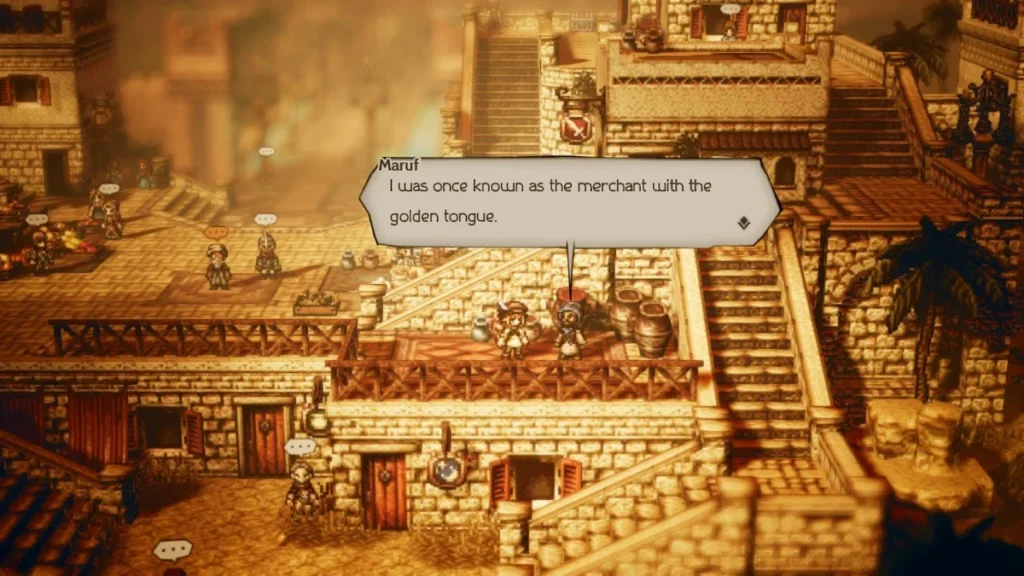
Merchant seems boring on paper. Who wants to play accountant in a fantasy JRPG? But here’s the thing—this job transforms your resource economy and accelerates progression faster than any other starting choice.
Arrow of Fortune grants bonus JP (Job Points) based on damage dealt. More JP means unlocking skills and jobs exponentially faster across your entire roster. Mystic Shot hits all enemies and restores SP based on damage, essentially giving you free SP regeneration. The Collect skill steals currency directly from enemies, while passive abilities increase post-battle rewards. You’re not just playing the game—you’re optimizing it.
I didn’t start with Merchant. I wish I had. If you’re planning to thoroughly explore this game and unlock everything, Merchant accelerates that process by weeks of real-time grinding.
Scholar: The Elemental Powerhouse for Strategic Players
Scholar excels at one thing: discovering and exploiting elemental weaknesses. The Study Foe passive automatically reveals one enemy weakness at battle start. No more guessing. No more wasted turns testing different attacks. Just pure, efficient shield-breaking.
Your offensive toolkit covers Fire, Wind, and Light elements through skills like Fireball, Tornado, and Luminescence. Each hits all enemies, making Scholar perfect for clearing mob encounters efficiently. Later, double-hit versions (Fire Storm, Maelstrom, Blinding Light) turn you into an absolute monster for shield damage.
The trick? Pair Scholar with Warrior for optimal early coverage. Switch to Warrior for physical-weak enemies, then swap to Scholar when facing elemental vulnerabilities. This flexibility represents your protagonist’s greatest strength.
 My Winter Car Tips: 7 Essential Secrets The Game Won’t Tell You (2026)
 The 8-Person Party System: Front Row, Back Row, and Strategic Chaos
Here’s where Octopath Traveler 0 differentiates itself from its predecessors. You’re bringing eight characters into battle—four in the front row actively fighting, four in the back row providing passive buffs and waiting to swap in. This isn’t just “more characters = more power.” It’s a tactical puzzle that rewards strategic positioning.
My strategy? Set up the front row purely for shield breaking (multi-hit attacks that destroy enemy defenses quickly), and the back row for damage dealing (high SP cost nukes that obliterate broken enemies). Break the enemy with your front row, swap in the back row during their vulnerable turn, and unleash absolute hell.
The combat loop remains familiar: hit enemies with what they’re weak against to reduce shield points to zero. When they “Break,” they lose a turn and take massive damage. But with eight party members, breaking happens much faster than previous games. You’re essentially running two coordinated strike teams simultaneously.
 MineMogul Beginner’s Guide: How To Go From Pickaxe Peasant To Industrial Tycoon
 Wishvale Town Building: Your SimCity for JRPG Fans
Remember when I mentioned Wishvale gets torched in the prologue? Well, rebuilding it becomes your primary side objective for the entire game—and it’s way more important than it initially seems. This isn’t fluff content you can ignore. Town building unlocks permanent stat boosts, exclusive gear, powerful NPCs who provide passive benefits, and access to the game’s true ending.
After the prologue, Stia sets you on the path to clearing debris and constructing your first building: the Workshop. Materials spawn in the overworld as glowing blue glints and respawn over time, so you can farm them as needed. Different buildings require different materials—lumber, metal, cloth—which you’ll find scattered across Orsterra.
Here’s what I wish someone told me earlier: prioritize functional structures over decorative ones. Your first major facilities should be the Shop (for purchasing supplies without leaving town), Training Ground (for leveling characters passively), and the Monster Arena (for challenging elite enemies). Save Radiant Cornerstones—the premium upgrade currency—for upgrading your Church, which unlocks blue treasure chests that contain some of the game’s best equipment.
Each building upgrade and town expansion increases your Prosperity Level, which affects what you can build and who you can recruit. Certain NPCs provide game-changing passive benefits: the Traveling Merchant gives 20% discount on all purchases (this adds up to thousands of saved Leaves), Tyme provides +10% EXP from battles, and Juan grants +10% JP gains. These stack with everything else and transform grinding from miserable to manageable.
 Stop Building Like A Noob: Advanced Tactics To Break ‘Alchemy Factory’
 Path Actions: Stop Ignoring NPCs, They’re Treasure Troves
Every time you enter a new town in Octopath Traveler 0, you should immediately harass every NPC with a symbol over their head. I’m serious. Path Actions (Inquire, Entreat, Contend) aren’t optional side mechanics—they’re essential for gear acquisition, party member recruitment, and Wishvale population.
Inquire reveals NPC information and sometimes quest triggers. Entreat lets you purchase items from townspeople at varying success rates (influenced by your Wealth stat). Contend allows you to challenge NPCs and potentially steal their equipment. Depending on your Power, Wealth, and Fame levels, interactions may fail and force you to restore your reputation at the nearest Tavern, but successful actions reward you with free items, powerful Mastery skills, and recruitable characters.
Here’s the meta-strategy: NPCs with a small white handshake bubble in their dialogue box are recruitable for Wishvale. Each has an invisible Influence threshold (typically 40-100) you need to meet. Build Influence by leveling up (+2 per level), completing side quests (+5-15 each), and having specific travelers in your active party. If you can invite them to Wishvale, do it immediately. They provide passive resource generation you’ll desperately need later.
Pro tip: Always check NPC Path Actions before leaving a town. Some offer Mastery items that grant powerful skills to your characters. Missing these early can cost you dozens of hours backtracking later. For similar detailed strategies on optimizing gameplay systems, check out our Arc Raiders skill tree guide for another deep dive into character progression mechanics.
 Octopath Traveler 0 Complete Weapon Database (2026)
 Combat Deep Dive: Break, Boost, Repeat Until Victory
Combat in Octopath Traveler 0 revolves around two interconnected systems: Breaking and Boosting. Master these, and you’ll dominate. Ignore them, and you’ll get absolutely wrecked by enemies five levels below you.
Breaking happens when you reduce an enemy’s shield points to zero by hitting them with their weaknesses. Broken enemies lose their turn, take increased damage, and become sitting ducks for your heaviest attacks. With eight party members, you can break enemies in a single turn by coordinating attacks across multiple weaknesses.
Boost Points (BP) accumulate each turn, letting you spend up to three at once to enhance attacks. A boosted attack doesn’t just deal more damage—it hits multiple times, making it exponentially more effective for shield breaking. The key is timing: save BP for breaking enemies or unleashing massive damage during their broken state.
Here’s my battle flow: Analyze enemies with Scholar to reveal weaknesses. Use front-row characters with multi-hit attacks to break shields quickly. During the break window, swap in your back-row nukers (high SP cost skills like Fire Storm or fully-boosted physical attacks) and delete the enemy’s health bar. Rinse and repeat.
For tougher enemies and bosses, food buffs become non-negotiable. Early recipes grant basic stat boosts, but later dishes like Ratatouille provide +20% Elemental Defense, +15% Physical Defense, and massive resistance boosts that stack with other effects. Always eat before major fights—it’s the difference between victory and a humiliating game over screen.
 Arc Raiders Skill Tree Guide: Best Skills & Builds 2025
 The Cait Farming Secret: Free Level Boosts When You Need Them
Let’s talk about Caits—those adorable cat-like creatures that flee from battle and seem impossible to kill. Here’s the secret Square Enix doesn’t advertise: Caits provide absurd amounts of EXP. I’m talking three full levels when you’re in the early teens, and significant level jumps even at higher ranges.
The catch? They have low HP but take minimal damage from your attacks, and they’ll flee after a few turns. You need to burst them down fast. Use multi-hit attacks, boost your strongest damage dealer, and prioritize speed so you act before they escape. When my party was level 12-13, I encountered my first Cait. One successful kill later, everyone gained three levels. Three levels from one enemy.
Similarly, Octopuff enemies drop massive JP rewards, making them your go-to target for skill unlocking. Equip the Merchant or Dancer’s Extra JP support skill (unlocked after learning seven battle skills) to boost gains even further. Farm these enemies near Wishvale for consistent progression without needing to grind standard encounters for hours.
 My Winter Car Phone Guide: All Numbers, Locations & How to Call (2026)
 Job System Mastery: Unlocking and Switching for Maximum Flexibility
Only your protagonist can switch jobs freely, making them incredibly versatile. Every other party member has a fixed job that can’t be changed. To unlock additional jobs for your protagonist, you need to learn three skills in your current job (costing 430 JP total). This means your starting job choice determines which tools you access earliest, but eventually you’ll have access to all eight.
Prioritize unlocking Thief early regardless of your starting choice. Why? Stealing becomes increasingly valuable as enemies drop critical items: Healing Grapes, Inspiriting Plums, and most importantly, Olive of Life (since you can’t buy many from shops). Boost your Steal command and damage enemies first to increase success rates.
After Thief, branch into Scholar for the Analyze skill, which reveals enemy weaknesses and HP totals instantly. Knowing exactly what breaks an enemy saves time and resources. Then grab Merchant for economic benefits and JP acceleration. This progression gives you the versatility to handle any situation while maximizing long-term efficiency.
Each job comes with transferable passive skills you can equip even when using a different job. Once fully mastered, you gain additional copies of these passives, allowing you to stack powerful effects across your protagonist. Peak Performance (Warrior passive that boosts damage at full HP), Extra JP (Merchant/Dancer passive), and Elemental Augmentation (Scholar passive) all stack and transform your protagonist into an unstoppable force.
Understanding the Danger Level System
Unlike previous Octopath Traveler games, you can’t manually adjust difficulty settings. Instead, each area has a Danger Level indicating how tough enemies are relative to your current party. Higher Danger Levels mean stronger enemies, better loot, and significantly more EXP/JP rewards.
Here’s the progression trap: Don’t rush into high Danger Level areas just because the game lets you travel there. I made this mistake, confidently strolling into a Danger Level 20 zone with a level 15 party because I thought I was clever. The first random encounter lasted 15 minutes and nearly wiped my party. Know your limits, grind when necessary, and don’t let ego destroy your progress.
 Cloudheim Starter Guide: Stop Hoarding and Start Kicking
 Early Game Optimization: Character Creation Choices That Actually Matter
During character creation, you’ll select a Learned Skill, Favorite Dish, and three Belongings. These choices provide permanent benefits, so picking correctly matters more than the game lets on.
Best Learned Skills: Twin-Shot Mastery (strike twice in a single turn) or Weaken Foundation Mastery (weaken enemy stats permanently). Twin-Shot doubles your damage output and shield-breaking potential, making it the strongest all-around choice. Weaken Foundation shines in longer boss fights where reducing enemy attack and defense compounds into massive advantages.
Favorite Dish: This grants specific stat boosts when you eat that dish. Choose dishes that complement your starting job. If you’re going Warrior or Thief, pick a dish that boosts Physical Attack. Scholar or Cleric? Choose Elemental Attack. These stack with cooked food buffs, giving you a permanent edge.
Belongings: These provide early equipment that determines your starting stats. Prioritize attack-boosting items for damage dealers, or defensive items if you’re playing Cleric/Apothecary and need survivability. You’ll replace these eventually, but strong starting gear makes the first few chapters significantly smoother.
 The 2026 Guide to Path of Exile 2 Currency: Stop Wasting Your Orbs
 Don’t Waste Money on Inns: Fast Travel to Wishvale Instead
Every town has an inn charging you precious Leaves to rest and restore HP/SP. Here’s the move nobody tells you: Just fast travel to Wishvale and sleep in your own bed for free. This requires completing the very first couple of quests in the “Rekindling The Flame” questline (which happens automatically), but after that, there’s zero reason to waste currency on inns.
The only exceptions are when you’re deep in a dungeon with no fast travel point nearby, or when plot restrictions prevent warping. Otherwise, save your Leaves for equipment upgrades and Entreat actions with high-level NPCs. Every 100 Leaves saved compounds into better gear purchases later.
 ARC Raiders Friendly Lobby Guide: How Aggression-Based Matchmaking Actually Works
 The True Ending Requirement: 100% Town Completion
Here’s something the game doesn’t tell you until way too late: accessing the true ending requires 100% Wishvale town completion and beating the hidden final boss at Flamebearer’s Shrine. This isn’t optional side content—it’s the actual conclusion to the story.
What does 100% completion mean? Constructing all available buildings, upgrading key facilities with Radiant Cornerstones, recruiting every possible NPC, and maxing out your Prosperity Level through story progression. Radiant Cornerstones are the real bottleneck—you’ll need 40-50 total, and they only drop from elite enemies and specific boss encounters.
Start planning this from the beginning. Don’t waste Cornerstones on cosmetic upgrades early. Focus on functional upgrades that provide combat benefits: Church upgrades (unlock blue chests), Shop upgrades (better item availability), and Training Ground upgrades (faster passive leveling). These investments compound throughout your 100+ hour playthrough and make the endgame grind dramatically easier.
 Where Winds Meet Optimization Guide: How To Make The Game Look Beautiful Without Burning Down Your PC
 Advanced Tips for Surviving the Grind in Octopath Traveler 0
Let’s wrap this up with the wisdom I earned through pain, suffering, and approximately 15 game-over screens:
Toggle Battle Speed: Press Start during combat to speed up animations. Faster battles mean more efficient grinding when farming levels or JP. This single quality-of-life feature saves hours over the course of a full playthrough.
Recruit Strategically: Some NPCs provide game-changing benefits. Traveling Merchant (20% shop discount), Tyme (+10% EXP), Juan (+10% JP), Porter (+1 material when mining), and Yusufa (+1 herb gathering) all stack and transform resource acquisition. Prioritize recruiting these before cosmetic residents.
Complete Side Quests Simultaneously: Don’t marathon one storyline while ignoring others. Juggling multiple questlines keeps your party appropriately leveled and prevents scenarios where you’re steamrolling level 6 content with a level 45 party. It’s boring and wastes time.
Analyze Everything: The Scholar’s Analyze skill should be your first action in every new enemy encounter. Knowing weaknesses and HP totals eliminates guesswork and makes battles 50% faster. If you’re struggling with optimizing your builds and understanding game systems, our Alchemy Factory beginner’s guide offers similar deep-dive analysis into complex crafting and progression mechanics.
Stack Buffs Aggressively: Food buffs, Dancer buffs, equipment bonuses, and passive skills all stack multiplicatively, not additively. A fully buffed character can deal 3-4x their normal damage. Don’t save buffs for “when you really need them”—use them on every difficult fight.
Farm Materials Efficiently: Materials respawn over time, so revisit previous areas when you need specific resources. Porter and Yusufa residents increase material gains, making farming loops significantly faster.
 Best Job In My Winter Car: Fastest Way To Make Money Early (2026)
 Your Journey Begins: Making Octopath Traveler 0 Less Painful
Look, I’m not going to lie to you—Octopath Traveler 0 is a grind. It’s a dense, sprawling, 100+ hour JRPG that respects your intelligence but absolutely does not respect your time. But it’s also one of the most mechanically satisfying RPGs released in years, with gorgeous HD-2D visuals, tactical combat that rewards strategic thinking, and a town-building system that somehow manages to be both relaxing and addictive.
The game launched on December 4, 2025, and early reviews are strong—critics are praising its refined combat, huge 70-100+ hour campaign, and cohesive revenge-driven narrative. The main complaints are predictable: slow opening and overly familiar gameplay for series veterans. But if you’re new to the series or love tactical JRPGs, this is arguably the best entry point.
Start with Warrior, Merchant, or Scholar. Tackle all three storylines simultaneously. Obsessively use Path Actions in every town. Prioritize functional Wishvale buildings. Farm Caits and Octopuffs aggressively. Don’t waste money on inns. Stack buffs like your life depends on it (because in boss fights, it literally does).
Follow this advice, and you’ll transform from a confused rookie getting demolished by level 10 enemies into a tactical mastermind orchestrating eight-character combat symphonies. Will you still die sometimes? Absolutely. Will you rage-quit at least once? Probably. But you’ll do it with the knowledge that you’re playing optimally, and that’s worth something.
Now get out there and rebuild Wishvale. Those three Masters aren’t going to defeat themselves, and Orsterra needs a hero who actually knows what they’re doing. For more comprehensive game coverage beyond just the basics, check out our article on Where Winds Meet armor stats and sets to see how deep we go into understanding game systems. And if you’re juggling multiple complex games, our Arc Raiders throwables guide offers similarly detailed tactical breakdowns.
Trust me on this one. I learned these lessons so you don’t have to.
 My Winter Car Fatigue Guide: How Fatigue Works?
 Frequently Asked Questions About Octopath Traveler 0
Can I access the Octopath Traveler 0 beginner’s guide free?
Absolutely. This entire Octopath Traveler 0 beginner’s guide is completely free and covers everything you need to dominate early game without spending a dime on premium guides. We believe honest gaming advice shouldn’t be locked behind paywalls, so every strategy, tip, and trick here is yours to use immediately. The game itself has a free demo available on all platforms if you want to test these strategies before committing to the full purchase.
What is the best starting job in Octopath Traveler 0?
The best starting job depends on your playstyle, but Warrior, Merchant, and Scholar dominate early game. Warrior provides balanced offense and defense with excellent weapon coverage (swords and spears) that your early recruits lack. Merchant accelerates JP gains and resource acquisition, making long-term progression significantly faster. Scholar excels at discovering enemy weaknesses automatically and dealing massive elemental damage. For most players, Warrior offers the smoothest early experience, while Merchant provides the best long-term value if you plan to fully explore the game.
Where can I find a comprehensive Octopath Traveler 0 guide?
This article serves as your comprehensive starting point, but for continued Octopath Traveler 0 coverage, bookmark GlitchRant and check our dedicated 15 game-changing secrets guide for advanced strategies. We publish detailed guides covering specific mechanics, optimal builds, hidden content, and endgame optimization. Our guides are written by actual players who’ve completed the content, not AI-generated fluff or recycled press releases.
How does the Octopath Traveler 0 walkthrough differ from previous games?
The Octopath Traveler 0 walkthrough differs significantly because you’re controlling a single custom protagonist instead of eight fixed characters. You’ll tackle three separate storylines (Master of Power, Master of Wealth, Master of Fame) plus the Rekindling the Flame town-building quest, all of which interconnect and must be completed for the true ending. The party system allows eight simultaneous combatants (four active, four in back row), which fundamentally changes combat strategy compared to the four-character parties in previous games.
Should I choose Wealth, Power, or Fame in Octopath Traveler 0?
Choosing between Wealth, Power, or Fame doesn’t lock you out of content—you can freely switch between storylines and must complete all three for the true ending. The smart approach is completing Chapter 1 of all three paths before advancing to Chapter 2 of any single one. This strategy provides more party members, better equipment, higher levels, and prevents difficulty walls. Your initial choice only determines which storyline you start with, not your final progression path.
What are the essential tips and tricks for Octopath Traveler 0?
Essential tips and tricks for Octopath Traveler 0 include: prioritizing Warrior, Merchant, or Scholar as starting jobs; using Path Actions aggressively on every NPC; farming Caits and Octopuffs for accelerated EXP/JP gains; fast-traveling to Wishvale for free resting instead of paying for inns; stacking food buffs with Dancer buffs for multiplicative damage increases; and saving Radiant Cornerstones for functional building upgrades rather than cosmetic ones. Master the Break and Boost systems by coordinating eight-character attacks to break enemy shields in single turns.
Are there secret jobs in Octopath Traveler 0?
Yes, Octopath Traveler 0 features secret jobs including Warmaster, Runelord, Starseer, and Sorcerer, which unlock later in the game through challenging shrine battles. These advanced jobs provide powerful abilities that exceed standard job capabilities. However, they require significant story progression, high character levels, and defeating brutal optional bosses. Focus on mastering the eight starting jobs first before attempting secret job unlocks—rushing into shrine battles unprepared will result in humiliating defeats.
How do I build the best team in Octopath Traveler 0?
Building the best team requires balancing weapon coverage, elemental damage, healing, and support across eight party slots. Front row should focus on multi-hit attacks for rapid shield breaking (Warrior, Hunter, Thief), while back row provides high-damage nukes and healing (Scholar, Cleric, Merchant with Donate BP). Essential characters include Stia (Architect with healing), any Warrior for sword/spear coverage, Scholar for elemental damage and Analyze, and Merchant for resource optimization. Rotate party members based on enemy weaknesses rather than maintaining a fixed lineup—flexibility beats optimization in this game.
 My Winter Car Jobs Guide: How To Fund Your Project Without Starving To Death (2026)