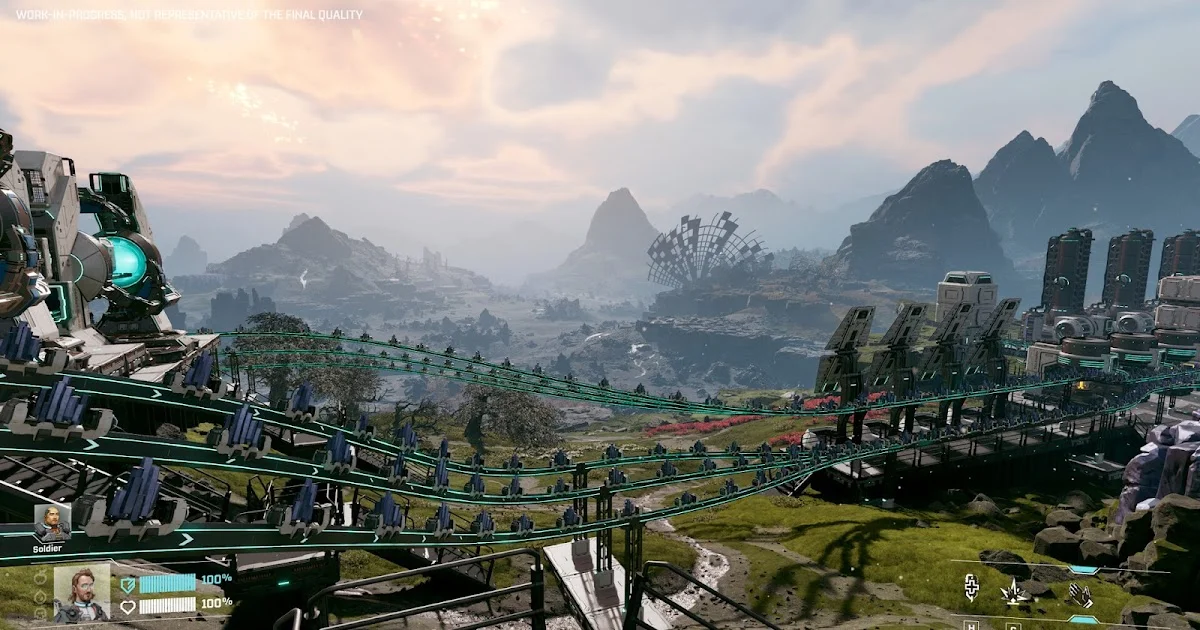
Let me tell you about my first three hours in StarRupture—I died eleven times. Eleven. I starved to death while standing next to edible plants. I died of dehydration twenty meters from a water source. I got obliterated by an infection cloud because I thought my shield would protect me (spoiler: it doesn’t). By death number seven, I was ready to uninstall and write a scathing review about how the game explains absolutely nothing.
Then something clicked. I realized StarRupture isn’t just another survival game—it’s a brutal physics lesson disguised as entertainment. The game doesn’t hold your hand because real survival situations don’t come with tutorials. Once I stopped treating it like a theme park and started respecting the mechanics, everything changed. Now I’m writing this StarRupture Survival Manual so you don’t have to endure my eleven deaths of shame.
Here’s the thing—most survival guides tell you what to do but skip the critical why. They’ll say “eat Polifruit” without explaining that it gives you 11 precious calories or that you’ll find clusters north of your landing site near small lakes. This guide is different. We’re going deep on every survival mechanic, every deadly mistake I made, and every lesson I learned the hard way.
 Best Job In My Winter Car: Fastest Way To Make Money Early (2026)
 Table of Contents
Your First 10 Minutes: The Survival Checklist That Actually Keeps You Alive
Before we dive into the nitty-gritty survival mechanics, let’s cover the immediate priorities that separate survivors from corpses. I learned these the hard way—you get to learn them the smart way:
Critical Survival Priorities (In Order):
- Raid your emergency pod immediately – You’ve got 20 Rations sitting there. That’s your safety net for the first brutal hours when you’re still figuring out which plants won’t kill you.
- Find water before you think you need it – Your hydration meter drops faster than you expect. Hydrobulbs are your best friend, and they’re usually north of the landing site near small bodies of water.
- Learn the keybindings NOW – Press Tab to open your inventory. Sounds basic, but I watched my hunger bar hit zero because I couldn’t figure out how to actually eat the food I’d collected.
- Avoid infection clouds and radiation fields at all costs – Your shield doesn’t protect you from environmental hazards. See that ominous purple cloud? Run the opposite direction.
- Gather while you explore – Don’t just walk past resources. Grab every Hydrobulb, Polifruit, and Prickler you see. Future you will thank present you.
This StarRupture Survival Manual breaks down exactly what kills you and how to prevent each death with surgical precision.
 EVERY MINE IN ARC RAIDERS (AND WHY YOU NEED THEM)
 Understanding Your Four Ways to Die: The StarRupture Survival Meters
StarRupture tracks four survival meters simultaneously, and here’s what nobody tells you—they don’t work independently. Let your hunger drop too low and your health regeneration stops. Ignore toxicity and suddenly you’re taking damage faster than you can heal. It’s a cascading failure system that punishes neglect brutally.
Health: Your Most Obvious Failure Indicator
Your health bar is straightforward—it shows how close you are to becoming a respawn statistic. What’s not straightforward is how everything else affects it. Combat damage, fall damage (which hurts more than you’d think), environmental hazards, toxicity buildup—they all chip away at this meter.
The real trick? Health regenerates naturally when your other meters are stable. Keep your hunger above 30%, maintain decent hydration, avoid toxicity, and your shield will regenerate first, followed by your health. But let any other meter tank, and you’re stuck at whatever health you’ve got left while the game finds creative ways to finish you off.
Healing items exist, but they’re scarce early game. Your best strategy is prevention through proper hunger and hydration management—which brings us to the meters that actually matter most.
Hunger: The Silent Killer That Sneaks Up on You
I died of starvation my second time playing. The frustrating part? I was surrounded by edible plants. I just didn’t know which ones to eat or how the calorie system worked. Let me save you that embarrassment.
Your hunger meter depletes constantly. Drop below 30% and your health stops regenerating. Hit zero and you start taking damage—slowly at first, then faster until you collapse. The game gives you about 15 minutes of warning, but only if you’re paying attention.
Best Early-Game Food Sources:
Polifruit – Your bread and butter. Each one provides 11 calories, they’re everywhere, and they’re impossible to miss with their distinctive purple-ish appearance. Found in clusters near your landing site and scattered throughout the starting biome. Grab these aggressively.
Pricklers – The dual-purpose survival plant. Provides 5 calories AND 8 hydration points per unit. Less common than Polifruit but worth their weight in gold when you find them. Look for spiky, cactus-like plants in rocky areas.
Emergency Rations – Twenty of these spawn in your emergency pod. They provide solid calories and never spoil. Don’t burn through them immediately—save them for emergencies when you’re exploring far from known food sources.
Pro tip I learned after death number four: always keep your hunger above 50% before attempting anything dangerous. That buffer gives you time to react if things go sideways, and you maintain health regeneration throughout combat or environmental hazards.
Hydration: The Meter That Drops Faster Than You Think
Dehydration killed me three times before I understood the hydration system. The problem? Water sources aren’t as obvious as in other survival games, and your hydration depletes faster than hunger—especially if you’re sprinting around like I was.
When your hydration drops below 30%, your movement speed decreases. Hit zero and you start taking damage while moving like you’re wading through concrete. It’s not a fun way to die, trust me.
Primary Water Sources:
Hydrobulbs – The best early-game hydration source. These bulbous plants contain significant water and grow near actual water sources (the game’s subtle way of teaching you to look for environmental water). Check north of your landing site near small lakes—there’s usually a cluster waiting.
Pricklers – Remember these from the hunger section? They provide 8 hydration points alongside their 5 calories. Finding a Prickler patch is like discovering an oasis.
Purplant – Provides hydration but requires more advanced gathering tools. Early game, focus on Hydrobulbs and Pricklers.
Star Tears – Rare but incredibly valuable. These provide substantial hydration and have additional properties that become more relevant as you progress into StarRupture corporation tech tree unlocks.
Here’s the hydration strategy that finally kept me alive: never let your hydration drop below 40% unless you’re certain you’re near water sources. The penalty for dehydration kicks in hard, and recovering from low hydration while also managing hunger and toxicity creates a death spiral that’s difficult to escape.
Toxicity: The Invisible Killer You Keep Ignoring
Toxicity was my most confusing meter initially because the game doesn’t explain what causes it or why it matters. Spoiler: it matters a lot, and it’s probably why you keep dying without understanding why.
Toxicity builds up from eating contaminated food, environmental exposure, certain plant types, and lingering in infected areas. As toxicity increases, your health regeneration slows, then stops, then reverses—you start taking passive damage even with full hunger and hydration.
The infection cloud mechanic is particularly brutal. Those ominous purple clouds you see? They don’t just damage you directly—they pile on toxicity stacks. Your shield does nothing against them. Walk into an infection cloud at 50% toxicity and you’ll be dead before you realize what happened.
Similarly, radiation fields (those shimmering distortion areas) pump toxicity into you constantly. Early game, you simply cannot survive extended exposure. Mark these areas mentally and route around them until you’ve unlocked proper protection through the corporation progression system.
Managing toxicity requires specific detox items that you won’t have early game. Your best strategy is prevention—avoid contaminated areas, don’t eat questionable food sources, and retreat immediately if you see your toxicity creeping above 30%. Unlike hunger and hydration which you can recover from, toxicity sticks around and compounds your other problems.
 ARC Raiders on Steam Deck: The Complete Settings and Performance Guide
 The Emergency Pod: Your 20 Rations and Why They Matter
Let’s talk about the single biggest mistake new players make—ignoring the emergency pod. I’m guilty of this too. I spawned, saw the tutorial prompts, immediately wandered off to explore, and promptly died of starvation surrounded by plants I didn’t know I could eat.
Your emergency pod contains 20 Rations. That’s not just a nice starting bonus—it’s your survival buffer while you learn the game’s systems. These rations never spoil, provide solid caloric value, and can be accessed anytime you’re near the pod (which becomes your respawn point until you build proper bases).
The smart strategy? Take 5 rations immediately for your inventory, leave the other 15 in the pod as emergency backup. This gives you portable food for exploration while maintaining a safety net. I learned this after my fifth death when I realized I kept dying within sprinting distance of my pod because I’d left all the food inside and couldn’t reach it before starving.
Once you’ve established reliable food and water sources, you can start taking more risks with your ration stockpile. But early game, those 20 rations are the difference between learning the mechanics and rage-quitting after death number eleven (speaking from experience).
 My Winter Car Firewood Cutter Guide: How To Attach And Use It?
 Where to Actually Find Food and Water: The Location Guide Nobody Writes
After dying repeatedly and methodically exploring the starting area, I’ve mapped out the most reliable resource locations for this StarRupture Survival Manual that kept me alive.
Finding Hydrobulbs: Your Water Source Solution
Hydrobulbs grow near water sources—small lakes, streams, and moisture-rich ground. The game is being educational here: in real survival situations, plants indicate water presence. Follow this principle and you’ll never die of dehydration again.
The most reliable Hydrobulb cluster spawns north of your landing site. Head roughly northwest for about 200 meters and look for a small lake with vegetation around it. There’s almost always a cluster of Hydrobulbs there. Harvest them, mark the location mentally, and return every in-game day—they respawn relatively quickly.
Secondary Hydrobulb locations appear near any environmental water feature. See a stream? Check both banks. Notice soggy ground texture? Investigate thoroughly. The game rewards environmental awareness, and Hydrobulbs are your reward for paying attention to terrain details.
Polifruit and Prickler Locations: Calorie Central
Polifruit grows almost everywhere in the starting biome, which makes it your staple food source. You’ll find large clusters near your landing site, scattered plants along any travel route, and concentrated patches near the edges of forested areas. The distinctive coloring makes them easy to spot once you know what you’re looking for.
Pricklers are less common but more valuable due to their dual hydration/calorie provision. Look for them in rocky areas, particularly on elevated terrain and around mineral deposits. They’re often near resources you’ll need for base building, so marking Prickler locations serves double duty—food and construction planning.
Here’s a gathering tip that took me too long to learn: always harvest more than you currently need. Your inventory has space, resources respawn over time, and you never know when you’ll get caught in a situation where returning to familiar gathering spots isn’t possible. I died once because I took exactly enough food for my current needs, then got lost, then starved with empty pockets. Learn from my stupidity.
 The Rusted Gear Hell Is Back: Here’s Where To Find Them After The Reset
 How to Stop Dying: Common Death Scenarios and Their Solutions
After my eleven deaths, I started documenting exactly what killed me and how to prevent it. Turns out, most StarRupture deaths fall into predictable categories that are completely preventable once you understand the mechanics.
Death Scenario #1: The Infection Cloud Ambush
You’re exploring, resources are good, everything seems fine. Then you walk around a corner into an infection cloud and you’re dead in seconds. Your shield doesn’t help. Your health pool doesn’t matter. You just die.
The Solution: Infection clouds are environmental hazards that bypass your shield entirely and stack toxicity so fast that health drain becomes inevitable. The purple haze is your warning—see it, avoid it, route around it. No exceptions early game. These clouds are the game teaching you that some threats can’t be tanked through, they must be respected and avoided.
Later, once you’ve progressed through the corporation tech trees and unlocked proper environmental protection, you can tackle infected areas. But for your first several hours, treat infection clouds like instant death zones and plan your movement accordingly.
Death Scenario #2: The Starvation Sprint
You’re running back to base, your hunger is at 15%, you can see your destination. You’re going to make it. Except you don’t—your hunger hits zero, health drain starts, and you collapse fifty meters from safety.
The Solution: Never let hunger drop below 30% before starting any journey. The buffer matters more than you think because hunger depletion accelerates when sprinting, and panic sprinting while low on hunger creates a death spiral. If your hunger is below 40%, eat NOW, before attempting anything else.
Carry emergency food always. Three Polifruit in your inventory provides 33 calories—enough to prevent starvation during unexpected situations. This lesson cost me two deaths before I internalized it.
Death Scenario #3: The Dehydration Surprise
Similar to starvation but sneakier because hydration depletes faster and the penalties hit harder. You think you have time. You don’t. Suddenly you’re at 10% hydration, movement is sluggish, and you’re taking damage while trying to reach water sources you can now barely move toward.
The Solution: Maintain 50%+ hydration before any exploration or combat. Keep Hydrobulbs or Pricklers in inventory for emergency hydration. Unlike hunger which gives you warnings, dehydration penalties hit immediately and compound quickly. Prevention is everything here.
Also, stop sprinting everywhere. Seriously. Sprint drains hydration faster, and that speed isn’t worth much if you die of dehydration before reaching your destination. Jog by default, sprint only when necessary.
Death Scenario #4: The Toxicity Time Bomb
Everything seems fine. Your hunger is good, hydration is solid, health is full. Then you notice your toxicity is at 60%, and suddenly you’re taking damage despite all your other meters being green. You frantically search for detox items you don’t have, and you die confused and angry.
The Solution: Monitor toxicity constantly. It’s the stealth killer because it doesn’t have immediate effects until it suddenly has catastrophic effects. If your toxicity climbs above 30%, you need to prioritize finding detox solutions or avoiding further contamination.
Early game, this means retreating from infected areas, avoiding radiation fields, and not eating questionable food sources just because your hunger is low. A little hunger damage is preferable to toxicity buildup that will kill you even with full food and water.
Death Scenario #5: The Vermin Swarm Panic
You encounter Vermin (the hostile alien creatures), combat starts, your health drops, you panic, you forget about your other survival meters, and suddenly you’re dying from a combination of combat damage and dehydration while trying to flee.
The Solution: Never enter combat with low hunger or hydration. Your health regeneration depends on stable survival meters. If you’re at 40% hunger and encounter Vermin, your health won’t regenerate after taking hits, turning a manageable fight into a death sentence.
Pre-combat preparation matters enormously. Eat, drink, ensure your survival meters are 60%+ before engaging threats. This transforms difficult encounters into manageable ones because your health regeneration actually functions during and after combat.
 Octopath Traveler 0 Complete Weapon Database (2026)
 Base Building and Defense: Progressing Beyond Pure Survival
Once you’ve mastered the immediate survival mechanics, StarRupture opens up into base building, automation, and defense systems. This is where the game transforms from “trying not to die” into “establishing permanent colonies”—and honestly, this is where things get really interesting.
Habitat Construction: Building Your First Real Shelter
Your emergency pod is temporary. Habitats are permanent structures that provide protection, storage, and respawn points. Building your first Habitat feels like graduating from survival school—you’re no longer just reacting to threats, you’re establishing infrastructure.
Habitats require resources you’ll gather during your survival activities—minerals, processed materials, and construction components. The materials naturally accumulate as you explore, making base building feel like a natural progression rather than a separate grind.
Location matters for Habitats. You want proximity to water sources (Hydrobulb clusters), food availability (Polifruit patches), and resource nodes for ongoing construction needs. The first Habitat location often becomes your main base, so choose thoughtfully. I built mine near that northern lake with Hydrobulbs, and it remains my primary base several progression tiers later.
Airlocks, Turrets, and Defense Systems
Vermin and other hostile creatures will attack your base. Airlock systems control entry points, ensuring infected creatures can’t breach your safe zones. Turrets provide automated defense, eliminating threats before they damage your infrastructure.
The defense learning curve involves understanding attack patterns and threat priorities. Vermin swarm tactics require different defensive setups than larger, solitary threats. You’ll experiment, watch your defenses fail, adjust placement, and gradually build impenetrable fortresses.
Verticality becomes crucial for advanced base design. Elevated Habitats and platforms provide tactical advantages, better resource visibility, and protection from ground-based threats. Think three-dimensionally—StarRupture rewards creative construction that leverages terrain and elevation.
Fabricators and Smelters: The Automation Awakening
Manual resource gathering is fine early game. By mid-game, you need automation. Fabricators convert raw materials into construction components. Smelters process minerals into refined resources. These systems transform resource management from active gathering to passive production.
The satisfying moment is when your production chains start feeding each other. Automated miners gathering ore, smelters processing it into materials, fabricators turning materials into components, and you’re free to explore, fight, or expand your base network without constantly worrying about resource micromanagement.
This is also where many survival games feel tedious—but StarRupture’s automation systems are intuitive enough that setting them up feels rewarding rather than frustrating. You’re building actual industrial infrastructure on an alien moon, and it feels as cool as it sounds.
 McDonald’s Pokemon Cards 2026: Complete 30th Anniversary Guide
 Corporation Tech Trees and Progression Systems
StarRupture’s progression revolves around corporation tech trees that unlock advanced equipment, construction options, and survival tools. These aren’t simple skill trees—they represent actual corporate entities competing for moon colonization rights, and you’re navigating their competing technologies.
Understanding LEM Modifiers and Map Unlocking
The Moon Energy Corporation (LEM) provides core progression infrastructure. Reaching LEM Level 3 unlocks map systems, revealing resource locations, hazard zones, and optimal base locations. Before this unlock, you’re navigating blind, relying on memory and physical landmarks.
LEM Modifiers alter gameplay mechanics—resource spawn rates, survival meter depletion speeds, hostile creature behavior, and environmental hazard severity. These modifiers let you customize difficulty and playstyle, making each playthrough distinct. For a deeper dive into corporation progression, check out our comprehensive guide on StarRupture corporation tech tree unlocks—it covers every unlock path and strategic decision point.
Choosing Corporation Paths: Strategic Decisions That Matter
Different corporations specialize in different technologies. One focuses on defensive infrastructure, another on resource extraction efficiency, a third on environmental protection and toxicity management. Your early corporation choices shape your mid-game capabilities significantly.
The strategic consideration isn’t just “which tech tree looks coolest”—it’s “what does my playstyle need most?” If you keep dying to toxicity, prioritize environmental protection technologies. If resource gathering is your bottleneck, focus on extraction efficiency. If base defense is problematic, invest in security systems.
You’re not locked into single corporation paths permanently. Eventually you’ll unlock technologies across multiple trees, but early game, focused progression yields faster results than spreading points thin across everything.
 Where Winds Meet Romance Guide: Yes, You Can Get Married, and Yes, It’s Actually Worth It
 Advanced Survival Tactics From Our StarRupture Survival Manual
The tutorial covers basics. Experience teaches advanced tactics. Here’s what this StarRupture Survival Manual has compiled from 50+ hours that would have saved me countless deaths and frustrations earlier.
The Inventory Management Nobody Explains
Press Tab to open inventory—sounds simple, but effective inventory management is crucial. Organize your inventory strategically: emergency food top slots, hydration items next, tools and weapons following, construction materials last. During panic situations, you need instant access to survival items without fumbling through disorganized inventory screens.
Stack items intelligently. Polifruit stacks save space. Emergency Rations should be split—keep some in inventory, some in base storage, some in your pod as backup. Redundancy prevents single-point failures where losing your main inventory means losing all resources.
Shield Mechanics: What It Actually Protects
Your shield regenerates before health when survival meters are stable—this is your first defense layer. Shield absorbs combat damage and fall damage but does absolutely nothing against environmental hazards. Infection clouds, radiation fields, and toxicity bypass shields completely.
Understanding this distinction changes combat tactics. Against Vermin, shields buy you time to reposition and heal. Against environmental hazards, shields are worthless—avoidance is mandatory. Don’t learn this lesson the way I did (death number six: confidently walking into infection cloud assuming my full shield would protect me).
The Resource Respawn Rhythm
Resources respawn on cycles tied to in-game time progression. Mark your major resource locations—Hydrobulb clusters, Polifruit patches, Prickler spots—and establish gathering routes. Efficiently cycling through marked locations ensures constant resource flow without wasting time searching randomly.
This rhythm becomes your survival foundation. Morning: gather Hydrobulbs north of base. Afternoon: collect Polifruit along eastern route. Evening: check Prickler locations near mineral nodes. This routine prevents resource shortages that create survival crises.
Combat Strategy: When to Fight, When to Run
Early game, running is often smarter than fighting. Vermin drop resources, but they also drain your health and force consumption of valuable healing items. Calculate whether combat rewards justify the resource cost—sometimes bypassing threats conserves resources better than eliminating them.
Combat becomes more viable after unlocking weapon upgrades and ammunition fabrication. Early game weapons are weak, ammo is scarce, and your health regeneration depends on stable survival meters you’re still learning to maintain. Don’t force combat encounters you’re not prepared for—there’s no shame in strategic retreat.
 My Winter Car Phone Guide: All Numbers, Locations & How To Call
 Lessons From Other Brutal Survival Experiences
StarRupture reminded me of other punishing survival mechanics I’ve encountered. If you’re struggling with StarRupture’s complexity, you might find parallels in other survival challenges worth exploring.
The persistent threat management resembles My Winter Car’s alcoholism mechanics—both games feature cascading failure systems where ignoring one problem creates multiple downstream crises. In My Winter Car, alcohol dependency affects your character’s functionality similarly to how StarRupture’s toxicity degrades your survival capabilities.
Speaking of My Winter Car, the fatigue system shares surprising similarities with StarRupture’s survival meters. Both games punish players who push too hard without managing their character’s needs. Our partner site GameNero has an excellent breakdown of how fatigue works in My Winter Car that illustrates similar survival pressure mechanics.
Even games like Arc Raiders implement survival-adjacent systems where resource management and strategic decision-making determine success. If you’re invested in Arc Raiders, GameNero recently published a compelling analysis on whether expedition resets are worth it—similar risk-reward calculations apply to StarRupture’s progression decisions.
And while we’re discussing complex game systems that don’t hold your hand, if you’ve experienced technical issues with Arc Raiders, you might appreciate our troubleshooting guide for fixing DXGI_ERROR_DEVICE_HUNG errors. Technical problems compound survival game frustrations—fixing them improves your actual gameplay experience significantly.
For players who appreciate deep, complex systems that reward mastery, GameNero’s beginner’s guide to Octopath Traveler 0 demonstrates similar learning curves where initial confusion transforms into satisfying mastery. Different genre, same philosophy: respect the mechanics, learn the systems, experience rewarding progression.
 Arc Raiders Economy Exploit: This Crafting Recipe Is Literally Printing Money
 The StarRupture Survival Manual: Final Thoughts
Here’s what I want you to understand—StarRupture isn’t trying to be unfair. It’s not bugging you with artificial difficulty. It’s teaching you actual survival principles through interactive mechanics: prioritize immediate threats first, maintain resource buffers, understand your environment, adapt strategies based on circumstances, and respect hazards you cannot overcome.
My eleven initial deaths weren’t the game being broken. They were me being impatient and refusing to learn systems before diving in. Once I slowed down, paid attention to my survival meters, learned which plants provided what resources, and understood the difference between tankable threats and mandatory-avoidance hazards, the game opened up entirely.
Now I’m building sprawling base networks, optimizing corporation progression paths, and actually enjoying the challenge rather than fighting against it. The shift from “this game is impossible” to “this game is brilliantly designed” happened entirely through understanding the mechanics we’ve covered in this StarRupture Survival Manual.
Your first few hours will be rough. You’ll die repeatedly. You’ll feel frustrated. That’s normal and expected. But if you follow the survival priorities we’ve outlined—manage your meters proactively, gather resources aggressively, avoid environmental hazards religiously, and build infrastructure progressively—you’ll transition from desperate survival to confident colonization.
The game rewards patience, observation, and strategic thinking. Those eleven deaths taught me more than any tutorial could have. Now I’m passing those lessons to you, minus the frustration of discovering them through repeated failure.
 Stop Building Like A Noob: Advanced Tactics To Break ‘Alchemy Factory’
 Frequently Asked Questions About StarRupture Survival
What is the 3-3-3 rule for survival?
The 3-3-3 rule is a real-world survival mnemonic that states you can survive approximately 3 minutes without air, 3 hours without shelter in harsh conditions, 3 days without water, and 3 weeks without food. In StarRupture, this principle translates directly to gameplay mechanics—prioritize oxygen and shield integrity first (your immediate survival layer), find shelter from radiation and infection clouds second (environmental protection), secure water sources third (hydration management), and establish food gathering fourth (long-term sustenance).
What makes StarRupture interesting is how faithfully it implements this hierarchy. Players who ignore environmental hazards die in minutes regardless of their food and water supplies. Players who maintain shelter and protection but neglect hydration die within hours. The game mechanically enforces realistic survival prioritization, which is why understanding this rule transforms your approach from reactive scrambling to strategic preparation.
What is star rupture?
StarRupture is a space survival game where you’re stranded on a hostile alien moon following a catastrophic planetary event. The “rupture” refers to the cataclysmic incident that devastated the moon’s ecosystem and left you fighting for survival against environmental hazards, hostile alien creatures, and the fundamental challenges of sustaining human life on an inhospitable world.
Gameplay centers on managing four critical survival meters—health, hydration, hunger, and toxicity—while simultaneously building bases, establishing automated resource production, unlocking corporation technology trees, and defending your colonies against threats. The game distinguishes itself through its refusal to handhold players through survival mechanics and its emphasis on learning through experience rather than explicit tutorials.
The “rupture” also represents the thematic break from conventional survival games—StarRupture doesn’t soften its mechanics or provide safety nets. It commits to simulation-style survival where cascading failures occur naturally, mistakes have consequences, and mastery comes from understanding interconnected systems rather than following quest markers. It’s survival gaming for players who want actual challenges rather than survival-themed action games.
 How to Build My Winter Car Corris Rivett – ALL PARTS & ASSEMBLY PROCESS EXPLAINED
 Your Turn: Join the GlitchRant Community
You’ve got the survival knowledge. You understand the mechanics. You know what killed me eleven times so you can avoid those deaths. Now it’s time to put this StarRupture Survival Manual into practice and see how your experience compares.
Did this guide save you from death number eight? Did you discover survival tactics I missed? Are you still dying to something we haven’t covered? I genuinely want to know—your feedback shapes future guides and helps the GlitchRant community learn collectively.
Drop your survival stories, questions, or corrections in the comments. Share your most embarrassing StarRupture death (I’ve been brutally honest about mine, so don’t hold back). Let’s build a knowledge base that helps everyone survive this beautiful, punishing game.
And if you found this guide helpful, share it with your friends who keep rage-quitting after their seventh death. They’ll thank you later—probably right after they successfully survive their first in-game day without dying.
Game on, survivors. May your hunger stay fed, your hydration stay topped, your toxicity stay low, and your deaths teach you something useful.
 My Winter Car Corris Rivett Guide: How To Build A Car While Losing Your Mind?