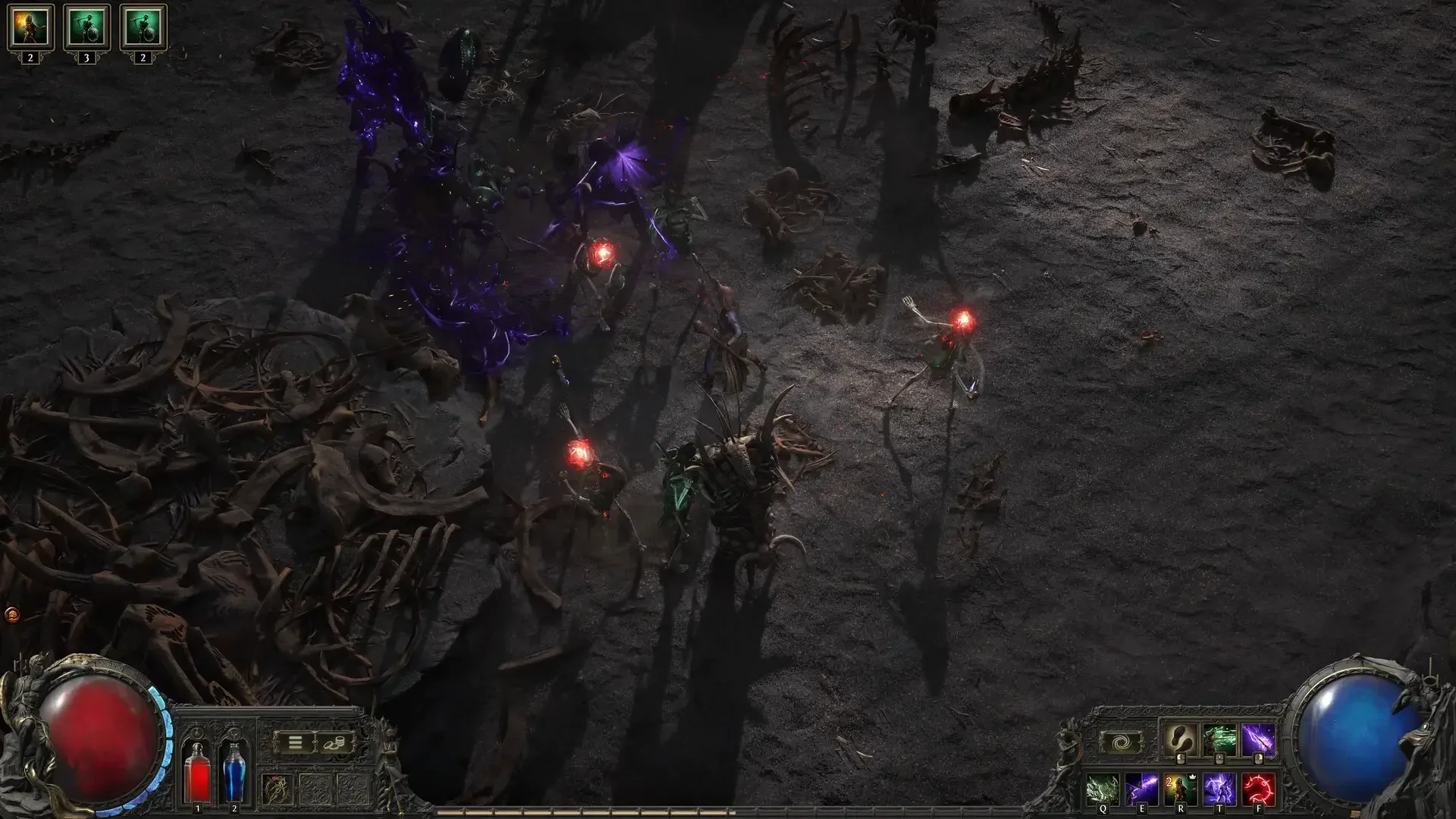
Your stash is crammed with shimmering orbs, your weapon deals pathetic damage, and everyone in global chat won’t shut up about “Divines.” This is Path of Exile 2’s economy in a nutshell.
After burning countless hours analyzing gear mods and market trends, I’ll tell you straight: Path of Exile 2 refuses to coddle you. It drops a handful of chance cubes in your lap and shoves you into a devil’s gambling den. As 2026 approaches, the meta is crystallizing, but the core mechanics remain ruthlessly unforgiving. Here’s what you must grasp: “Currency” isn’t some shiny coin it’s pure functionality. Every single orb represents a critical choice. Will you invest it in personal upgrades, or flip it to traders who’ve mastered the system better than you ever will? Let me show you how to navigate this chaos without destroying your character build.
 Arc Raiders Economy Exploit: This Crafting Recipe Is Literally Printing Money
 Table of Contents
The Anatomy of an Item (Read This or Go Broke)
You need to decode what you’re actually staring at before clicking a single crafting orb. Items aren’t standalone objects they’re vessels with predetermined slots begging to be optimized.
Rarity Matters
Normal (White): Completely bare. No modifiers whatsoever. Pure potential.
Magic (Blue): Supports up to 2 modifiers maximum. One Prefix, one Suffix.
Rare (Yellow): Can hold up to 6 total modifiers. Three Prefixes, three Suffixes.
Unique (Orange): Features fixed, often bizarre properties. Generally locked from crafting.
Prefixes vs. Suffixes This distinction bankrupts newcomers faster than anything else. The game won’t let you stack six damage modifiers on one blade strict rules apply.
Prefixes: Your power stats. On weapons, expect Physical or Elemental Damage. On defensive gear, you’ll find Life, Mana, plus Evasion/Armour values.
Suffixes: Your supplementary stats. Resistances, Attributes (Strength/Dexterity), and Attack Speed occupy these slots.
Enable advanced mod tooltips by hovering with Alt pressed you’ll see grey text revealing tier breakdowns and category assignments. Attempting to force a Suffix onto gear already maxed with three Suffixes accomplishes exactly nothing. Understanding available “real estate” on items separates winners from losers.
 My Winter Car Fatigue Guide: How Fatigue Works?
 The Currency Tier List
I’m organizing these by practical impact on your mental health, not drop frequency.
The “I Am Poor” Starter Pack
These drop constantly. Burn through them freely during your leveling journey.
Orb of Transmutation: Converts White items to Blue, applying one modifier. Slam these into every flask immediately.
Orb of Augmentation: Applies an additional mod to Blue items. Found a magic blade with only one stat? Pop this for the second slot.
Orb of Alteration: Completely rerolls Magic items. Yes, you crave perfect mods, but wastefully spamming these during early progression is financial suicide.
The Mid-Game Workhorses
Regal Orb: Promotes Blue items to Yellow (Rare) status while adding one modifier. This bridges the gap between solid magic gear and potentially exceptional rare equipment.
Orb of Alchemy: Instantly transforms White items into Yellow (Rare) with four random modifiers. Your go-to for converting maps to rare quality or gambling on promising weapon bases.
Chaos Orb: Fully randomizes a Rare item’s modifiers. Strips one random property, adds another randomly. It’s technically gambling, yet the player economy treats these as baseline currency units.
The High Roller Table
Exalted Orb: Injects one additional modifier into Rare items. Got exceptional gear with empty modifier space (like five out of six possible mods)? Slam this and cross your fingers.
Divine Orb: Rerolls numerical ranges on existing modifiers without changing which mods you have. Won’t grant new stats, but can elevate a “+10 Life” roll to “+100 Life” if the tier permits. This is premium currency for endgame trading.
Orb of Annulment: Deletes one random modifier. Reserved for situations where god-tier weapons rolled one garbage stat like “+1 Mana” and you’re willing to risk everything. Pure, unfiltered gambling.
The “Do Not Touch” Zone
Mirror of Kalandra: Generates perfect copies of non-unique items. The absolute rarest drop in-game. If one drops for you, do NOT use it under any circumstances. Sell it and purchase literally anything you desire for eternity.
 My Winter Car Bank Guide, What You Can And Cannot Do With It (2026)
 The New PoE 2 Mechanics: Sockets and Runes
PoE 2 revolutionized socket systems. Playing with outdated knowledge from 2013 will leave you lost.
Gem Sockets vs. Item Sockets
Jeweller’s Orbs: Now modify Skill Gems directly, not equipment. They inject support sockets into gems themselves.
Artificer’s Orbs: Add sockets to your actual Gear (Armor/Weapons). Acquire these by salvaging socketed equipment.
Runes and Soul Cores Your gear sockets now house Runes guaranteed modifiers you manually install.
Ezomyte Runes: Provide specific enchantments based on placement. Glacial Runes grant Cold Damage when socketed in weapons, but Cold Resistance when placed in armor.
Soul Cores: Endgame variants discovered in the Trial of Chaos. They deliver percentage-based bonuses or Spirit attributes.
 Staying Alive In Peräjärvi: A Guide To Not Dying Like A Total Amateur
 How to Craft Without Crying (A Step-by-Step Algorithm)
Want quality crafted items? Stop blindly spamming Chaos Orbs with your eyes shut. Follow systematic logic instead.
Step 1: Get the Right Base You require items with appropriate Item Level (ilvl). Higher ilvl unlocks superior modifier tiers. Crafting on low-level swords guarantees you’ll never witness Tier 1 damage rolls.
Step 2: The Magic Phase Apply an Orb of Transmutation for blue rarity. Spam Orbs of Alteration until desirable modifiers appear (such as “Increased Physical Damage”). If only one mod exists, use an Orb of Augmentation for the second slot.
Step 3: The Rare Transition Once two excellent mods grace your blue item, apply a Regal Orb. This elevates it to Rare and introduces a third modifier. If that third mod disappoints, decide: accept it, or risk an Annulment (dangerous).
Step 4: The Essence Shortcut Alternatively, skip the previous steps entirely with Essences. Essences elevate items straight to Rare while guaranteeing one specific modifier. Often the smartest approach since it eliminates one RNG layer.
Step 5: The Finish With open slots remaining on quality Rare items, employ the Crafting Bench (when accessible) or Exalted Orbs to complete the build.
A note on Trading
Sometimes optimal “crafting” means letting others handle it. Access the in-game trade site or visit NPC Alva for currency exchanges. Gold handles NPC transactions and respecs, while player-to-player trading operates on Chaos and Divine standards.
 Octopath Traveler 0 Beginner’s Guide: 15 Essential Tricks to Survive the Grind
 CURRENCY CHEAT SHEET
What to hoard versus what to spend.
 My Winter Car Phone Guide: All Numbers, Locations & How to Call (2026)
 | CURRENCY | FUNCTION | VERDICT |
|---|---|---|
| Transmutation / Augmentation | Upgrades/Modifies Magic Items | Spend liberally during leveling. |
| Alchemy Orb | White -> Rare | Apply to Maps and quality Weapon bases. |
| Chaos Orb | Rerolls Rare Item | Stockpile for trading unless absolutely desperate. |
| Divine Orb | Rerolls Modifier Values | Premium Value. Avoid using until wealthy. |
| Artificer’s Orb | Adds Sockets to Gear | Critical for your Rune system. |
 Octopath Traveler 0 Complete Weapon Database (2026)
 The Bottom Line
Path of Exile 2 crafting functions as a resource vacuum by design. It exists to drain your stockpiles systematically. The sharpest players understand exactly when to craft versus when to simply purchase items from lucky crafters. But if you’re determined to gamble at this particular slot machine, at minimum ensure you’re betting with the correct tokens. Good luck out there, Exile. You’ll absolutely need it.
 My Winter Car Firewood Cutter: Complete Guide to Chopping and Delivering Wood