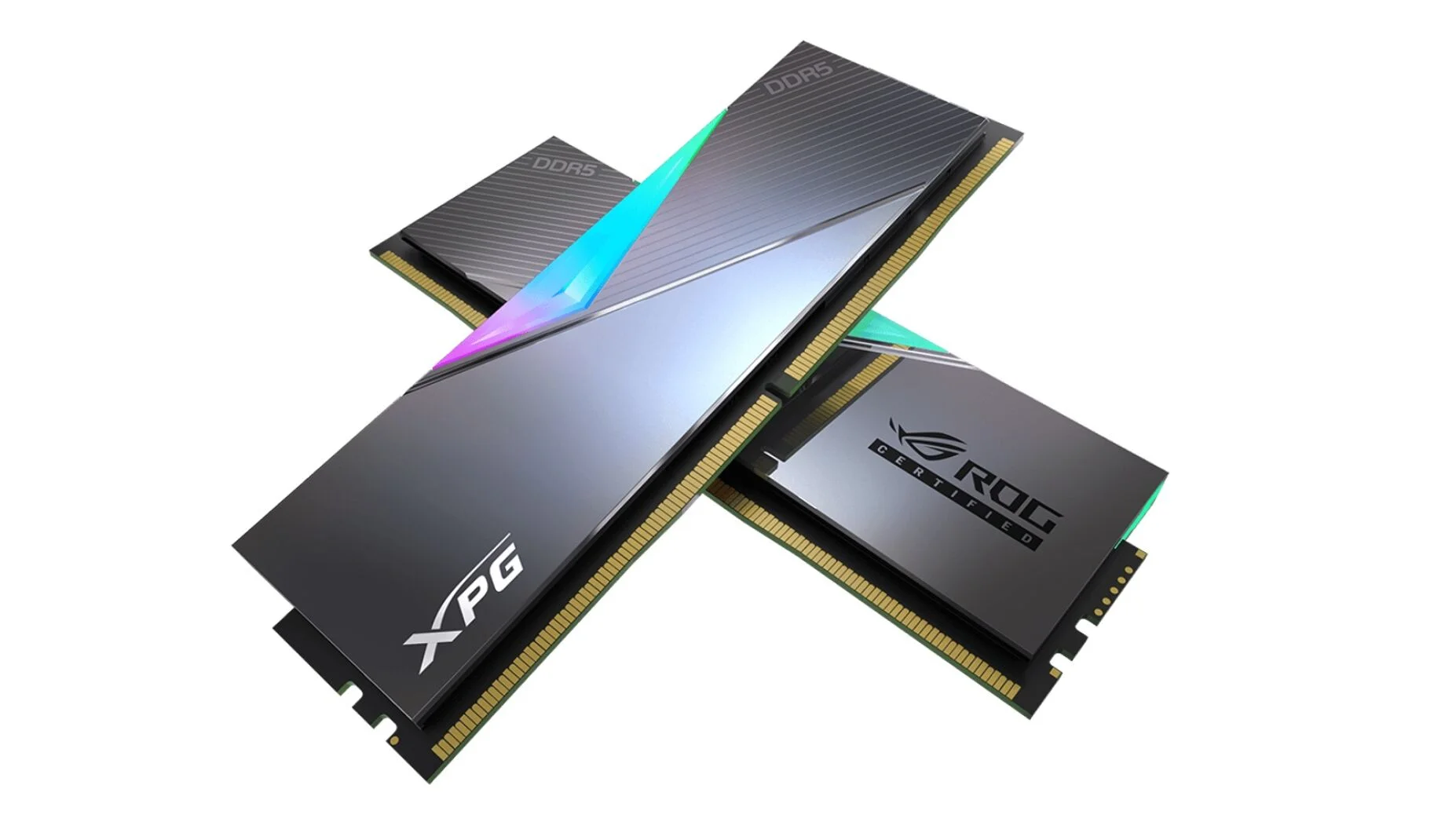
Picture this: You’re ready to build your dream gaming rig, but when you check RAM prices, your jaw hits the floor. That 32GB DDR5 kit that cost $120 six months ago? It’s now pushing $400. Welcome to 2025’s memory nightmare—and it’s gotten so bad that rumors started flying about ASUS rumored to start making DRAM to escape the chaos entirely.
Here’s the thing—when I first heard whispers that ASUS is reportedly planning to manufacture its own RAM, my initial reaction was “finally, someone’s doing something about this mess.” But as with most things in tech, the real story is way more complicated than the headlines suggest.
 The Switch 2 Could Be Getting One of the Best-Selling Games of 2025
 Table of Contents
The Rumor That Had Everyone Talking
On December 25th, Persian tech outlet Sakhtafzarmag dropped a bombshell: ASUS was supposedly planning to enter the DRAM manufacturing game by Q2 2026. The timing made sense—memory prices have literally quadrupled in some cases, and PC manufacturers like ASUS are getting squeezed harder than a stress ball at tax season.
The report claimed that if memory prices and supply didn’t normalize, the Taiwanese giant would set up dedicated DRAM production lines by mid-2026. For their ROG and TUF gaming lineups, this could’ve been a game-changer. After all, why keep paying for RAM at inflated prices when you could make your own?
Look, I get the appeal of this story. We’re all desperate for someone—anyone—to break the stranglehold that Samsung, SK Hynix, and Micron have on memory production. When only three companies control over 90% of the global DRAM market, and they’re all prioritizing AI data centers over consumer products, it’s natural to hope for a hero.
 Dataminers uncover local multiplayer interface for Monster Hunter Wilds Switch 2 version via PC (2026)
 Reality Check: ASUS Says “Not Happening”
Here’s where the story takes a turn. Less than 24 hours after the rumor went viral, Taiwan’s Central News Agency (CNA) went straight to the source. ASUS is reportedly denying everything, and their statement was pretty definitive: they have “no plans to invest in a memory wafer fab.”
The company clarified they’ll continue deepening relationships with existing memory suppliers and adjusting product specifications to deal with market conditions—which is corporate speak for “we’re going to keep doing what we’ve always done and probably pass those costs onto you.”
Now, before you accuse me of being cynical, let’s talk about why this rumor was always a long shot. Building a DRAM fabrication facility isn’t like opening a coffee shop. We’re talking billions of dollars in investment, years of development time, and expertise that ASUS simply doesn’t have in-house.
 John Romero’s Cancelled Xbox Game Was A “Priest Simulator” With Hotline Miami Vibes
 Why Building RAM Is Harder Than It Sounds
Think about it this way: ASUS designs and assembles computers brilliantly. But manufacturing memory chips? That’s a completely different ball game. You need cleanroom facilities that cost more than most small countries’ GDP. You need process engineers who understand semiconductor fabrication at a molecular level. And you need yields high enough to make the whole thing profitable.
Even if ASUS started building today with unlimited budget and resources, we’re looking at a minimum two-year timeline—and that’s if everything goes perfectly. By then, this current memory shortage could be over, leaving them with a multi-billion dollar facility they don’t need.
There’s another angle worth considering: CXMT, a Chinese DRAM manufacturer, has been making noise about their DDR5 capabilities. Some speculated ASUS might partner with them instead of building from scratch. But CXMT faces its own production scaling challenges, especially with U.S. equipment import restrictions limiting their growth potential.
 South Korea Proposes Serious Loot Box Law Overhaul
 The Real Villain: Why RAM Prices Are Insane Right Now
Let me lay out what’s actually happening with memory prices, because understanding this is crucial to seeing why ASUS rumored to start making DRAM was always more fantasy than reality.
AI data centers have become memory-eating monsters. We’re not talking about a modest increase in demand—we’re talking about AI consuming an estimated 20% of total DRAM production in 2026. High-bandwidth memory (HBM) for AI accelerators requires three times the wafer capacity of consumer DDR5, and it’s way more profitable for manufacturers.
Samsung, SK Hynix, and Micron aren’t stupid. They’re looking at AI companies willing to pay premium prices for enterprise memory, and then looking at consumer PC builders complaining about $400 RAM kits. From a business perspective, the choice is obvious—and brutal for us gamers.
The numbers don’t lie. Contract prices for DDR5 have increased over 100% since September 2025. DDR4 prices have jumped 150-200% in the same period. Even used RAM markets are getting squeezed as panic buying sets in. Some Japanese retailers have literally stopped taking desktop PC orders until 2026 because they can’t secure enough memory to fulfill them.
 ARC Raiders Sales Blast Past 12 Million Copies to Kick Off 2026 in Spectacular Fashion
 What This Means for PC Builders and Gamers
Here’s where it gets personal. If you’re planning a build in early 2026, you’re going to feel this in your wallet. Industry analysts are predicting average PC prices could jump 8% or more, with gaming laptops and desktops taking even bigger hits.
Dell has already announced price increases up to 20-30%, specifically citing memory costs “out of their control.” Framework raised their DDR5 upgrade pricing by 50% and warned another increase is coming. Even budget prebuilt manufacturers are shipping systems with less RAM than they used to, hoping buyers won’t notice the downgrade.
The gaming industry isn’t immune either. When memory gets expensive, everything that uses it—consoles, graphics cards, gaming laptops—gets more expensive too. We’ve already seen the PlayStation 5 and Xbox Series X/S face price pressure, and the upcoming console generation could be delayed or launched at higher prices because of this crisis.
 McDonald’s Pokemon Cards 2026: The Ultimate Guide to the 30th Anniversary Promotion
 Should You Buy RAM Right Now or Wait?
This is the question everyone’s asking, and honestly? There’s no perfect answer. But here’s my take after watching this situation evolve for months.
If you need RAM now for a build you’re actively working on, buy it. Waiting for prices to “come down” is a gamble, and experts are saying this shortage could persist until late 2027 or even 2028. That’s potentially three more years of inflated pricing and limited availability.
If your current system is running fine and you’re just thinking about an upgrade, waiting might make sense—but set a realistic timeline. Don’t expect 2024 pricing to return anytime soon. When the market does stabilize (and it will eventually), we’re probably looking at a “new normal” that’s higher than what we were used to.
Consider alternatives like buying used RAM from trusted sellers. Unlike GPUs, memory modules are pretty durable and harder to counterfeit convincingly. Local marketplaces might have better deals than retail right now, though even used prices are climbing.
 Leak: PlayStation Starts 2026’s PS Plus Essential Games with NFS Unbound, Epic Mickey, and Core Keeper
 The Bigger Picture: What Happens Next
Look, I wish the ASUS rumored to start making DRAM story had turned out to be true. The memory market desperately needs more competition and production capacity focused on consumer needs. But the economics just don’t work for a PC manufacturer to jump into semiconductor fabrication.
What we’re actually going to see is more of what ASUS already announced: companies will “deepen relationships with suppliers” (translation: negotiate harder for allocations), “adjust product specifications” (translation: ship systems with less RAM), and “optimize product lifecycles” (translation: extend older products to avoid expensive new builds).
Samsung and SK Hynix are building new fabs, but those won’t meaningfully increase supply until 2027-2028. Micron has essentially abandoned the consumer market to focus on enterprise and AI. The few smaller manufacturers like CXMT can’t scale fast enough to make a difference.
Meanwhile, the gaming industry is already adjusting. Developers are optimizing games to run with less RAM. Console makers are exploring alternative memory configurations. And gamers? We’re learning to make do with what we have while hoping the AI bubble eventually bursts.
 How to Safely Clean Your PC: The Ultimate Maintenance Guide To Stop Overheating
 Why This Matters Beyond Gaming
Here’s something that doesn’t get talked about enough: this memory crisis affects way more than just gaming PCs. Smartphones are seeing specs roll backwards—mid-range phones that would’ve shipped with 12GB RAM are now coming with 8GB. Laptops for work and school are getting more expensive or less capable.
The broader tech industry is essentially being held hostage by three memory manufacturers who’ve decided AI profits are more important than serving consumer markets. That concentration of power is dangerous, and stories like the ASUS rumored to start making DRAM rumor show how desperate the situation has become.
IDC research suggests that in 2026, we could see device manufacturers either significantly raise prices or cut specifications across the board. For budget-conscious buyers, this could mean being priced out of upgrades entirely. For enthusiasts, it means accepting that the hobby just got a lot more expensive.
 Arc Raiders Developer Console Disabled After Players Exploit Game-Breaking Commands
 Lessons from Past Shortages
If you’ve been in the PC gaming space long enough, this isn’t your first rodeo with component shortages. We’ve been through the crypto mining boom, COVID-era supply chain disasters, and graphics card scalping nightmares. Each time, we survived—but not without bruises.
The difference this time is the driver. Cryptocurrency demand was cyclical—it crashed eventually. COVID supply issues were temporary. But AI demand? That’s looking increasingly structural. These aren’t miners hoping to get rich quick; these are trillion-dollar companies building the infrastructure for the next decade of computing.
That makes the memory shortage fundamentally different and potentially longer-lasting. When major industry players are restructuring their entire operations around AI priorities, it signals a permanent shift rather than a temporary disruption.
 Nintendo Download for 1st January, 2026: Happy New Year!
 What Can Actually Be Done?
Let’s be real: individual consumers can’t fix this. We’re not going to boycott Samsung into submission when they’re making billions from AI data centers. We can’t force Micron to care about the consumer market when enterprise customers are literally paying double.
What we can do is make informed decisions. Understand that expensive RAM isn’t going away quickly. Budget accordingly for builds. Consider whether you really need 32GB or if 16GB will suffice for your actual use case. Look at DDR4 platforms if you’re on a tight budget—yes, prices have increased there too, but the absolute cost is still lower than DDR5.
On a policy level, this crisis highlights the dangers of semiconductor manufacturing consolidation. Governments are starting to notice—the U.S. CHIPS Act, European semiconductor initiatives, and investments in domestic production are all responses to supply chain vulnerabilities exposed by situations exactly like this.
But those solutions take years to materialize. New fabs won’t start producing meaningful quantities until 2027 at the earliest. So in the short term, we’re stuck with the current reality of limited supply, high prices, and manufacturers prioritizing whoever pays most.
 Arc Raiders Expedition Wipe Attracts One Million Players, But Hoarding Problem Needs Fixing
 Frequently Asked Questions
Will ASUS make RAM in 2026?
No, ASUS officially denied rumors that they’re planning to manufacture DRAM. The company stated to Taiwan’s Central News Agency that they have “no plans to invest in a memory wafer fab.” Instead, they’ll continue working with existing memory suppliers and adjusting product specifications to manage the current shortage.
Why are gamers boycotting ASUS?
Recent gamer frustration with ASUS stems from multiple issues unrelated to the DRAM rumors—including warranty service complaints, high pricing on ROG-branded products, and quality control concerns on some motherboards and graphics cards. The memory crisis has added to this tension as ASUS products become more expensive due to component costs, but the boycott movement predates the current RAM shortage.
What are the rumors for ASUS CES 2025?
While ASUS typically showcases new gaming laptops, motherboards, and peripherals at CES, specific 2025 announcements remain under wraps. Industry speculation suggests new ROG gaming laptops with updated Intel and AMD processors, possibly refreshed handheld gaming devices, and new motherboard chipsets. However, the memory shortage may impact product configurations and pricing of any announced hardware.
Will the ASUS ROG 2025 have a new design?
ASUS hasn’t officially announced design changes for 2025 ROG products. However, the company typically iterates on its gaming laptop designs annually, often incorporating improved cooling solutions, updated port configurations, and refined aesthetics. Given the memory constraints affecting the industry, any 2025 ROG releases may focus more on internal component optimizations rather than dramatic external redesigns.
 Get Sceptilite in Pokemon Legends: Z‑A Ranked Battles Season 5 (2026)
 The Bottom Line: No Quick Fixes Coming
So where does this leave us? The fantasy of ASUS rumored to start making DRAM was appealing because it suggested someone might actually do something to fix the consumer memory crisis. Reality is less exciting: we’re stuck with high prices, limited supply, and no cavalry coming to save us.
ASUS made the right business decision in denying these rumors and not jumping into DRAM manufacturing. The capital requirements, technical challenges, and timing issues make it a non-starter for a company whose expertise lies elsewhere. But that doesn’t make the underlying problem any less frustrating for those of us trying to build or upgrade gaming PCs.
The memory shortage is real, it’s painful, and it’s not going away quickly. AI demand is fundamentally reshaping the semiconductor industry, and consumer computing is taking a back seat. Understanding this reality helps us make better decisions about when to buy, what to prioritize, and how to budget for builds in this new landscape.
For now, keep an eye on prices, buy when you need to rather than waiting for deals that might never come, and remember—your current RAM is probably good enough for another year if you need it to be. We’ll get through this, just like we’ve gotten through every other component shortage. It just might take longer and cost more than we’d like.
If you’ve got thoughts on the memory crisis or the ASUS rumors, hit me up in the comments. And if you found this helpful, share it with your fellow builders who might be planning their next rig. We’re all in this overpriced memory mess together.
For more gaming industry news and hardware analysis, check out our coverage of Arc Raiders gameplay mechanics, skill system strategies, Hideo Kojima’s latest interview on game development, and upcoming Yakuza franchise developments.
 One YouTuber Tried To Live A “Normal Life” In Cyberpunk 2077, And It Broke Him